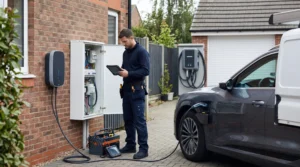
7kW vs 22kW Home EV Charger: Which One Do You Need?
For almost every UK home, the answer is 7kW. A 22kW charger needs a three phase electricity supply, and most houses in the UK only have a single phase. Even…

For almost every UK home, the answer is 7kW. A 22kW charger needs a three phase electricity supply, and most houses in the UK only have a single phase. Even…
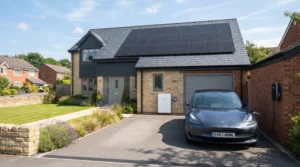
If you've already got solar panels, or a home battery sitting alongside them, not every EV charger on the market is built to work well with that setup. The short…
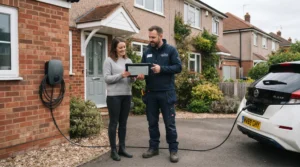
A customer got in touch last month after collecting three quotes for the same job, a straightforward driveway install, and getting three very different numbers back. One electrician quoted £450.…
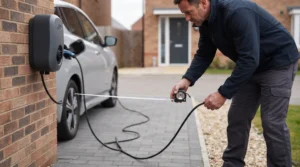
If your charger will sit close to your charge port and you park the same way every time, 5m will do the job. If the port ends up at the…
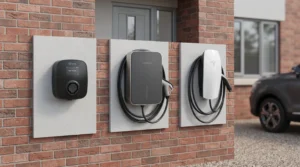
Quick answer first. Ohme ePod wins on app smarts and price. Andersen Quartz wins on looks if you want that cable hidden away completely. Tesla Wall Connector wins if you…
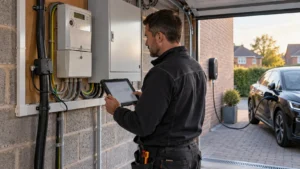
EV charger load management is a feature that lets your charger lower its own speed when the rest of the house is using a lot of power, so the home…
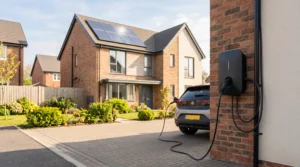
A solar aware EV charger uses your spare solar power to charge the car. It keeps an eye on what your panels are making and what the house is using,…
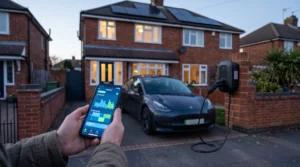
In the UK, almost every new home EV charger is already "smart" by law. Since 30 December 2022, chargers sold in Great Britain have had to meet the Smart Charge…
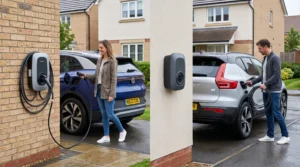
A tethered EV charger has the charging cable fixed to the unit, like a petrol pump. An untethered charger is a socket on the wall, and you plug in your…
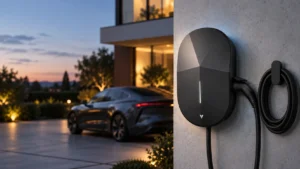
For most UK homes, the best home EV charger in 2026 is a 7kW Type 2 wallbox with a tethered cable, load management and an IP65 or IP66 rating, fitted…
Volec ApS. Designed in Copenhagen. Made responsibly across Europe.