A customer got in touch last month after collecting three quotes for the same job, a straightforward driveway install, and getting three very different numbers back. One electrician quoted £450. Another came in at £1,100 and included a consumer unit upgrade the first quote never mentioned. The third wouldn’t give a fixed price at all until someone had seen the property in person. None of them were lying. None were overcharging either. They were just pricing different jobs that happened to look the same from the customer’s end of the phone.
That gap is the real answer to “how much does it cost.” It depends on the charger itself, the state of your existing electrics, how far the cable has to run, and whether any grant support applies to you. Here’s what pushes the number up or down.
What Does a Basic Installation Cost on Its Own?
Straightforward single phase install, consumer unit that doesn’t need upgrading, short cable run from the unit to the car: most UK installers charge somewhere between £350 and £800 for labour and parts. That’s the baseline. No trenching, no cabling through walls longer than a metre or two, no electrical work beyond connecting the charger itself.
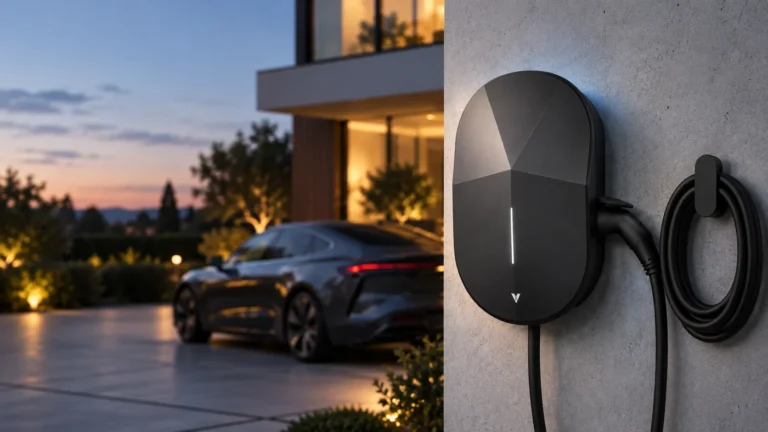
Add the charger’s own price on top, since most quotes separate the two. VOLEC’s Pulse charger is currently at a launch price of £239, which puts a straightforward install, charger included, well under £1,000 for most properties. Worth comparing other quotes against that number. Some installers bundle labour and hardware into one combined figure, and that makes it much harder to see where your money’s really going.
Why Do Some Quotes Come In So Much Higher?
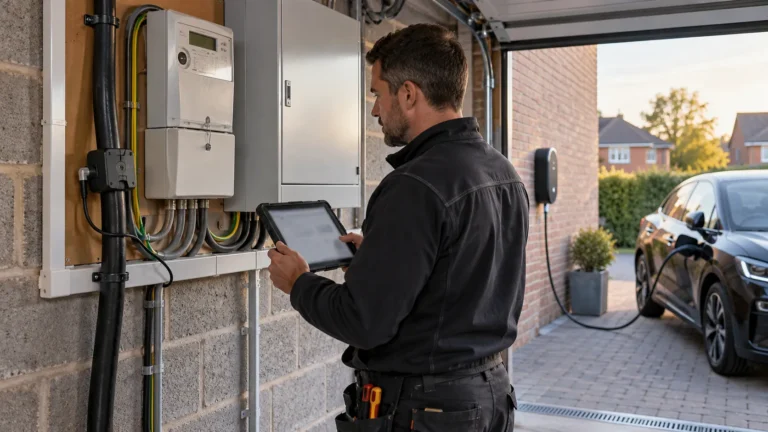
Usually one of four things. First, a consumer unit upgrade. Needed before a charger can be safely connected, adds anywhere from £150 to £400 depending on the work involved, and it’s the single biggest reason two quotes for the same house can differ by hundreds of pounds. Older properties, especially anything with a fuse box rather than a modern circuit breaker panel, need this step far more often than newer builds.
Second, cable runs. Consumer unit in the garage, car on a driveway thirty feet away? Or the only sensible route runs under a path or through a wall? That extra distance and groundwork adds labour hours, and sometimes materials, that a short simple run never needs. No off street parking changes the picture again, since the charger might need mounting somewhere other than right beside the car, or routed through shared access that needs permission first.
Load management’s the fourth, and it’s the one first time buyers rarely think to ask about. If your property’s existing supply is already close to capacity, an installer may recommend a load management device that stops the charger tripping the main fuse during high demand. Adds to the upfront cost, but it’s a lot cheaper than the supply upgrade you’d need otherwise. Our guide on EV charger load management explains when this becomes necessary and when it doesn’t.
Does Cable Length Affect the Overall Price?
A little, though it matters less than most people assume. Most tethered chargers come with either a 5m or 10m cable as standard, and the longer option adds a modest amount to the unit price, not to installation labour. Distance between the consumer unit and the parking spot is the real cost driver, not the cable length sitting on the charger itself. A 10m cable buys you flexibility, reaching a car parked further off, or either side of a shared driveway, more than it saves you money. Our comparison of 5m vs 10m EV charger cables covers which length suits which driveway or garage layout.
Are Grants Still Available Towards the Cost?
This is where a lot of outdated information still floats around online. The old EVHS grant for homeowners with off street parking at a single property ended back in March 2022. Most people buying a house and installing a charger today won’t qualify for that one.
What’s still live is narrower, but worth checking anyway. Landlords and people in flats or rented accommodation can apply for the current EV chargepoint grant for landlords, worth up to £350 per socket. Businesses installing chargers for staff or fleet vehicles can access the Workplace Charging Scheme, also up to £350 per socket, for up to forty sockets. Neither covers the typical owner occupied house with a driveway, which describes most of our customers, so check your own situation before assuming support applies.
How Long Does a Typical Installation Actually Take?
Timing affects cost too, mostly through labour hours rather than the headline price. A straightforward install with no consumer unit upgrade and a short cable run usually takes two to three hours from start to finish, often done in a single visit. Add a consumer unit upgrade and you’re looking at half a day, since the electrician needs to isolate the supply, swap or upgrade the unit, then connect and test the charger afterward.
Longer cable runs, trenching under a path, or routing through a wall can stretch things to a full day or occasionally two, particularly if groundworks need to be done before the electrical connection itself. Weather plays a part with outdoor trenching too, so an installer might split the job across two visits if conditions aren’t workable on the day. None of this changes the final invoice dramatically, but it does affect how soon you can expect to use the charger once you’ve booked, which matters if you’ve already ordered the car.
What About Ongoing Running Costs After Installation?
Installation’s the one off cost. Running costs matter just as much over the life of the charger, though. A full charge on a typical EV battery, done at home overnight on a standard domestic tariff, usually costs somewhere between £8 and £15 depending on battery size and your rate. Switch to an EV specific or off peak tariff and that figure drops significantly, since most providers now offer cheaper overnight rates aimed specifically at home charging.
A smart charger makes a real difference here too. It can schedule charging automatically for off peak hours instead of relying on you to remember to start it manually. Our comparison of smart vs standard EV chargers covers what the smart features add beyond the running cost savings, app control and usage tracking included.
Does a Solar Panel Setup Change the Cost Picture?
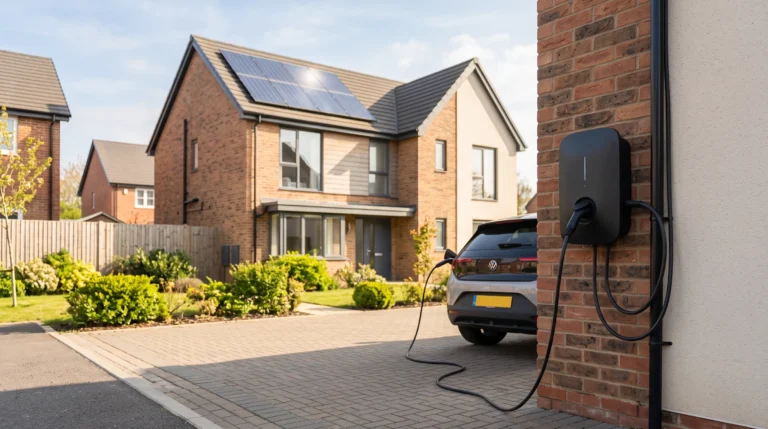
Already got solar panels, or thinking about installing them alongside a charger? The cost calculation shifts again. A solar aware charger routes surplus solar generation into the car instead of exporting it to the grid at a lower rate, which changes the payback period on both the solar system and the charger over time. Doesn’t lower the upfront installation cost, and a solar aware setup sometimes costs slightly more to install than a basic charger, but the running cost savings over several years can be substantial for households already generating their own power. Our guide on solar EV chargers in the UK goes through how that pairing works in practice.
How Much Does a 7kW Charger Cost Compared to Faster Options?
7kW’s the standard output for most home installs, and it’s what the majority of UK properties are already wired to support without further upgrades. Faster home chargers exist, but anything above 7kW on a single phase domestic supply usually isn’t possible without a three phase upgrade, something most homes don’t have and which costs far more to install than the charger itself. For almost everyone charging overnight, 7kW comfortably fills an EV battery from empty by morning. Paying extra for faster charging at home rarely makes sense when the limiting factor is your driveway time, not the charger’s output. Our breakdown of 7kW home EV chargers covers why this output became the UK standard and whether it’s enough for your situation.
Is It Worth Comparing Tethered and Untethered Chargers on Cost?
Tethered chargers, cable built in, generally cost a bit more upfront than untethered ones, which just give you a socket to plug a separate cable into. The gap isn’t large, usually £30 to £60 between otherwise similar models, but factor it in alongside convenience. Untethered means carrying your own cable and plugging in every time, which suits some households and annoys others. Our comparison of tethered vs untethered EV chargers goes into which setup tends to suit which driveway and daily routine.
What If You’re Installing for a Business or Fleet?
Costs look different once you’re outside a single home. Multiple chargers at a workplace bring economies of scale on labour. An electrician running cables and carrying out groundworks for five bays at once spends far less per socket than visiting five separate houses would cost. Expect a per socket price that’s often lower than a single domestic install once a site has four or more chargers going in.
The bigger difference is the Workplace Charging Scheme grant mentioned earlier. Businesses, charities, and public sector bodies can claim up to £350 per socket towards installation, for up to forty sockets across one or more sites. That can cover a meaningful share of the total project cost, particularly for a smaller business installing four or five chargers for a staff car park. Load management matters even more at this scale, since several chargers running at once on a shared supply need proper management to avoid overloading site capacity, and that’s where a lot of the added cost on commercial jobs genuinely comes from.
Fleet installations add another layer: scheduling software, usage reporting per vehicle, sometimes a dedicated supply upgrade if the fleet’s charging overnight in large numbers. These extras cost more upfront, but they usually pay for themselves fast on a fleet where every vehicle needs charging daily, since the alternative, relying on public charging infrastructure, costs considerably more per mile over time.
How Does VOLEC’s Pricing Work?
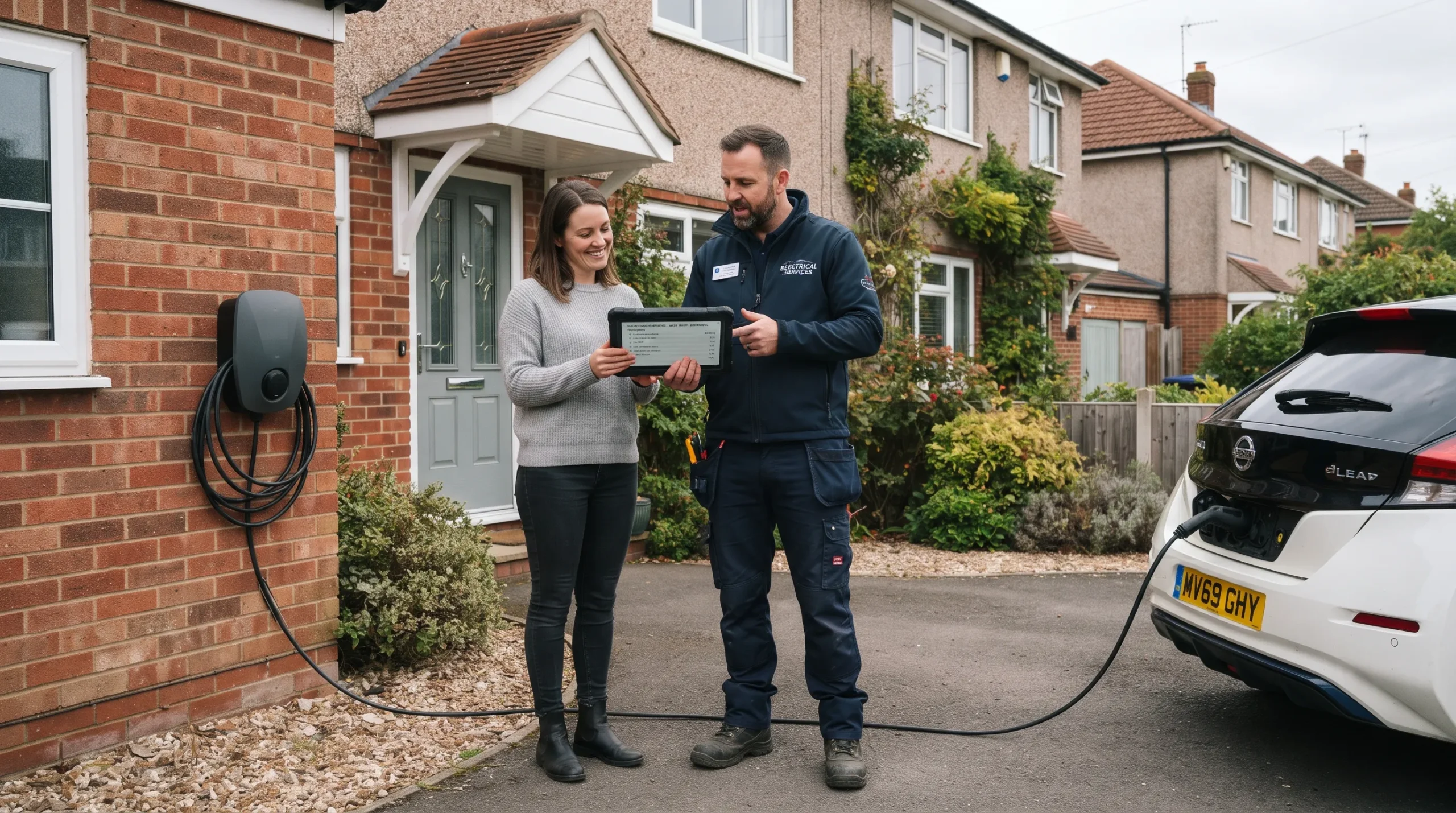
We sell the VOLEC Pulse directly, currently at a £239 launch price, and connect customers with vetted, nationwide installation partners rather than handling installation ourselves. That separation matters for cost transparency. You know what the charger costs before you’ve even spoken to an installer, and the quote you get afterward covers labour and electrical work specifically, not bundled hardware markup. Every installation partner in our network is qualified to the standard safe, compliant work requires, and quotes are given after a proper look at your property, never a flat rate guessed over the phone.
Before booking, it’s worth reading our buyer’s guide to the best home EV chargers in the UK if you’re still comparing models, and our comparison of the Ohme ePod, Andersen Quartz and Tesla Wall Connector if you want to see how the Pulse stacks up against other well known chargers on the market.
Quick Answers
What’s a realistic total cost for a straightforward home installation?
Including the charger itself, budget somewhere between £600 and £1,000 for a standard single phase install with no major electrical upgrades needed.
Does every property need a consumer unit upgrade?
No. Depends entirely on the age and condition of your existing electrics. A newer property with a modern circuit breaker panel often needs no upgrade at all, while an older fuse box setup frequently does.
Can you still get any grant money towards the cost?
Only in specific situations: landlords and rented or flat accommodation under the chargepoint grant for landlords, and businesses under the Workplace Charging Scheme. Most homeowners with their own driveway no longer qualify.
Is it cheaper to buy the charger and installer separately rather than through one company?
Not necessarily cheaper, but it’s more transparent. Seeing the charger price and the installation quote as two separate numbers makes it easier to compare value across options rather than judging one bundled figure.
Does installation cost vary much by region in the UK?
Slightly, mostly down to local labour rates rather than anything to do with the charger itself. London and the South East tend to run a little higher than the national average, while the install process and parts cost stay the same everywhere.
Can you install a charger yourself to save on labour costs?
No, and not just as a recommendation. UK chargers have to be installed by a qualified, registered electrician for the work to be safe and compliant, and insurers and manufacturers typically won’t honour a warranty on a self installed unit. Any savings from skipping a professional install aren’t worth the risk.
Is it cheaper to add load management at the time of installation rather than later?
Usually yes. Fitting it during the original install avoids a second callout and any extra labour needed to access the consumer unit again. Adding it afterward isn’t a major expense, but it does mean paying for a second visit on top of parts.
Does installing in a flat or apartment cost more than a house?
Often, yes, mainly because of shared access and permissions rather than the electrical work itself. Cable runs through communal areas, freeholder or management company approval, and sometimes a dedicated supply from a shared meter room can all add cost and time that a standalone house with its own driveway never runs into.
Get a Transparent Quote
Ready to see what installation would cost at your own property? Get in touch through our contact page and we’ll connect you with a vetted installation partner near you, or check our FAQ page for more on how the VOLEC Pulse and our installer network work together.