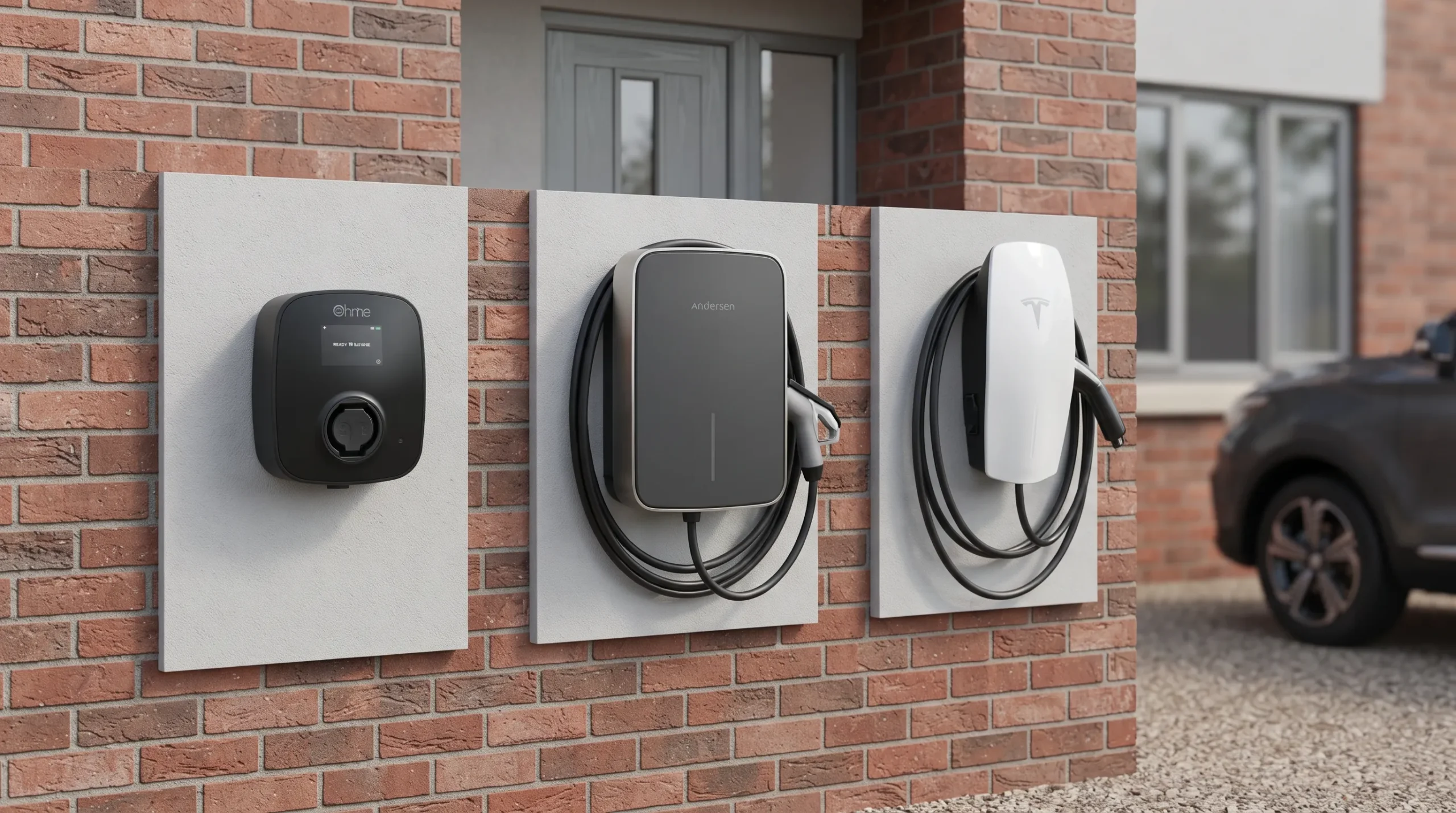
Quick answer first. Ohme ePod wins on app smarts and price. Andersen Quartz wins on looks if you want that cable hidden away completely. Tesla Wall Connector wins if you drive a Tesla and want the tightest integration with that one car. None of these three is a bad buy, to be clear. They’re just built for different priorities, and picking between them comes down to what matters to you day to day, not which name sounds the most premium.
We get asked about this trio constantly, usually by someone who’s already googled their way into more confusion than they started with. So here’s what each one actually gets you, where each one falls short, and where a charger like the VOLEC Pulse fits into that same conversation.
The Quick Comparison
| Ohme ePod | Andersen Quartz | Tesla Wall Connector | |
| Price | Lower end of the three | Highest, by a clear margin | Mid range |
| Cable | Tethered, visible | Hidden behind a closing door | Tethered, visible |
| Smart features | Strong, tariff integration | Basic app, limited smarts | Strong, but Tesla focused |
| Looks | Functional, not fancy | Striking design | Clean, minimalist |
| Best for | Budget conscious smart charging | Anyone prioritising kerb appeal | Tesla owners specifically |
Numbers move around a bit with current offers, so treat this as a shape of the market, not gospel pricing.
Ohme ePod: The Smart Charging Specialist
Ohme built its name on software, not hardware, and the ePod shows it. The app does clever things with energy tariffs. Shifts your charging automatically to the cheapest overnight rate if you’re on an EV tariff, no thinking required once it’s set up.
The hardware itself? Fine. Not exciting. It’s a tethered charger, cable always hanging there, and it doesn’t carry the sleek, almost furniture like presence something like the Andersen goes for. Care how your driveway looks to the neighbours? This won’t win you points there.
Where it wins, decisively, is value. Consistently one of the cheaper options among the serious smart chargers, and for most households, the savings from smart tariff switching alone cover a meaningful chunk of what you paid for the unit within a year or two.
Andersen Quartz: Built for Looks First
By a wide margin, the Andersen Quartz is the best looking charger of the three. The cable tucks away behind a closing door when it’s not in use, so what’s left on the wall is a clean, minimal box. Not a charger with a cable dangling off it. If your home’s a period property, or kerb appeal just matters to you, that’s worth more than it might sound.
That design comes at a real cost, and we mean that literally. The Quartz sits well above the other two on price, often by a significant margin, and its smart features are noticeably more basic than what Ohme or Tesla offer. You’re mostly paying for the look and the hidden cable mechanism here. Not for class leading software.
Let’s be straight about who this suits. Want the smartest possible charging behaviour per pound spent? Not this one. Want something that looks designed rather than just manufactured? Hard to beat.
Tesla Wall Connector: Built for One Brand
Tesla’s own charger does exactly what you’d expect. Tight integration with Tesla vehicles specifically, scheduling and monitoring through the Tesla app with a polish that makes sense, given both products come from the same company.
The catch sits right there in the name though. Don’t drive a Tesla, and you lose a fair chunk of what makes this unit appealing, since a lot of its smart functionality leans on Tesla’s own ecosystem instead of working as a universal, tariff aware smart charger the way Ohme’s app does. It’ll still charge any EV with a Type 2 connector. The clever bits just aren’t built for you if your car badge says something else.
Price sits in the middle of the pack, and the design is clean without being as dramatic as the Andersen. For a Tesla household, a sensible, low friction choice. For anyone else, it’s fair to ask whether you’re paying for Tesla polish you won’t fully use.
Where the VOLEC Pulse Fits Into This
We’d be doing you a disservice not mentioning our own charger here, so let’s be upfront about it. The VOLEC Pulse was built to sit in the gap between these three. Universal smart charging that works the same way regardless of what you drive. A design that doesn’t look like an afterthought bolted to your wall. Pricing that doesn’t force you to choose between smart features and looking good.
It comes with a 5m or 10m tethered cable depending what suits your setup, works with every EV on the market without favouring one brand over another, and the app handles tariff aware scheduling in a similar spirit to what Ohme does well, minus the design compromise that often comes with a purely software focused charger. We’d rather you compared it directly against these three than just took our word that it’s better. Have a look and see where it lands for your own priorities.
What Should Actually Decide This For You
Your tariff situation carries a lot of weight here. On, or planning to move to, an EV specific electricity tariff with cheap overnight rates? A charger with genuinely smart tariff integration pays for itself faster than most people expect, and that’s where Ohme and chargers built with similar software, the Pulse included, have a real edge over something like the Andersen.
Your car matters too, obviously. A Tesla owner gets more out of the Tesla Wall Connector than someone driving a different brand would, simply because the smart features are designed around that one ecosystem. Not driving a Tesla? That advantage mostly disappears.
How much you care about appearance is a personal call, and it’s completely fine to weight it heavily. Plenty of people happily pay more just for the Andersen’s hidden cable design, and that’s a perfectly reasonable reason to pick it over something cheaper.
Installation needs matching to the charger too. Cable length, where your car actually parks relative to the mounting point, whether your consumer unit needs work beforehand, all of it affects which unit fits your home properly. None of that shows up on a spec sheet.
A Word on Installation and Warranty
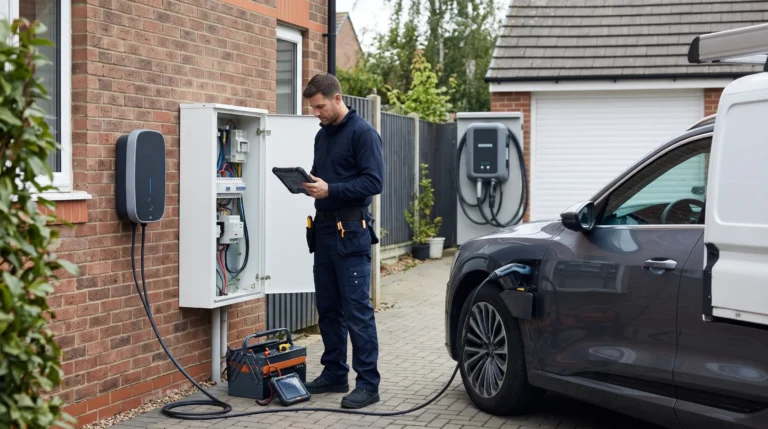
All three need a qualified electrician, full stop. None of them are a sensible DIY job given the wiring involved. Where they differ is in how installation gets arranged. Tesla tends to work through its own approved network, consistent, but less choice over who does the work. Ohme and Andersen both use a wider pool of certified installers, and VOLEC follows that same approach, installation partners available nationwide instead of one narrow approved list.
Warranty length varies more than people expect too, so ask directly rather than assuming they’re all the same. A longer warranty on the unit itself matters more over time than a slightly lower upfront price, especially since a home charger is something you’ll likely keep for the better part of a decade.
If You Want One Straight Answer
Go Ohme if price and smart tariff switching matter most and you don’t care how the unit looks. Go Andersen if the aesthetic really matters and budget isn’t the deciding factor. Go Tesla if you drive one and want the simplest setup within that ecosystem. And take a proper look at the VOLEC Pulse if you want smart charging and a charger that looks intentional, without picking one side of that trade off over the other.
There’s no single correct answer here, whatever a headline comparison article might tell you. The right charger is whichever one actually matches your car, your tariff, and how much you care about what ends up bolted to your wall.
What Happens If You Change Cars Later?
Worth thinking about before you buy, since most people keep a home charger far longer than they keep any single car. The Tesla Wall Connector is the one where this question matters most. Sell the Tesla and switch to a different brand, and you’ll still be able to charge with it, since it’s a standard Type 2 connector underneath, but you’ll lose the deeper app integration that was a big part of the appeal in the first place.
Ohme, Andersen and the VOLEC Pulse don’t have that problem, since none of them are tied to one manufacturer’s ecosystem to begin with. Buy an EV from a different brand next time, and the charger keeps working exactly the same way it always did. For anyone who isn’t completely certain they’ll stick with the same car brand for the next decade, that’s a genuinely practical point in favour of a brand neutral charger over a Tesla specific one.
Does Cable Length Make a Real Difference?
Yes, more than people expect before they’ve lived with a too short one. A 5m cable works fine for most driveways where the car parks close to the house. A 10m cable gives you a lot more flexibility if your parking spot’s further out, or more than one car needs to reach it. Measure your actual setup before assuming the shorter, cheaper option will do.
Is a Tethered Cable Always Better Than Untethered?
Not always. Depends what you want day to day. A tethered charger, which covers all three compared here, means the cable’s always there and ready, nothing extra to store or remember. An untethered unit looks tidier when it’s not in use and lets you swap cables if you ever need to, but it’s an extra step every single time you charge. Most home users lean tethered for the convenience, which is part of why it’s the standard across this comparison.
Do These Chargers All Qualify for Grants or Incentives?
Eligibility comes down to your situation, your property type, and whether you’ve got dedicated off street parking, more than it comes down to the specific brand. Check current eligibility before assuming any particular unit does or doesn’t qualify. Rules shift, and they vary by circumstance.
Frequently Asked Questions
Which of these three is cheapest overall?
The Ohme ePod typically sits at the lower end of the three, with the Andersen Quartz usually the most expensive by a clear margin.
Do I need a Tesla to buy the Tesla Wall Connector?
No, it charges any EV with a Type 2 connector. You just won’t get the full Tesla app integration without driving one.
Is the Andersen Quartz worth the extra cost?
If hidden cable storage and overall looks matter a lot to you, plenty of owners say yes. Optimising purely for smart features per pound? There are better value picks.
Does the VOLEC Pulse work with every electric car?
Yes. It’s built as a universal charger, not one tied to a specific brand’s ecosystem.
Can I switch energy tariffs after installing any of these?
Usually yes, though how well the charger adapts automatically depends on how smart its software is, and that’s where these units actually differ from each other quite a bit.
Does a smarter app always mean better charging results?
Not automatically, but it usually means more convenience, and on the right tariff, real savings over time without you managing charging times by hand.
Still Deciding Which Charger Fits Your Home?
Have a look at the VOLEC Pulse and see how it stacks up against what we’ve covered here for your own situation, your car, your tariff, and how much the design matters to you. No pressure to pick ours over the others. We’d just rather you made the call with the full picture in front of you than off a single spec sheet. Get in touch if you’d rather talk it through than compare specs on your own.